Our purple tulip Magnolia has scale, an infestation as repulsive as it sounds. It’s equally harmful and can ultimately kill the tree if left unchecked. We’ve been researching organic solutions, preferring beneficial insects if possible.
From the reading I’ve done, the scale may have been present months ago. Beautiful blossoms covered the Magnolia last spring, with no signs of the scale. In late June, however, I noticed some damage to of the leaves of the inner tree and only then did I discover the scale. We have all the tell-tale signs, now that I know what to look for:
- Crusty bumps along the branches
- Sticky leaves caused by scale excretions
- Ants on the leaves. They eat the sweet excretions and are known to defend the scale since they provide a food source.
Here are a few more details from the College of Agriculture Sciences at Penn State:
Magnolia scales are usually massed on the undersides of 1 and 2-year-old twigs, with heavy infestations completely encrusting branches. Other indicators of a scale infestation include reduced foliage and flower production, undersized leaves and twigs, and a black sooty mold on the foliage. After digesting the plant fluid, the scale excretes a clear sticky liquid called honeydew, which provides an ideal substrate for the black sooty mold fungus to develop. Magnolia scale infestations often go unnoticed until the leaves and twigs of the host plant turn black with sooty mold. The honeydew also provides a food source, attracting ants, bees, wasps and flies.
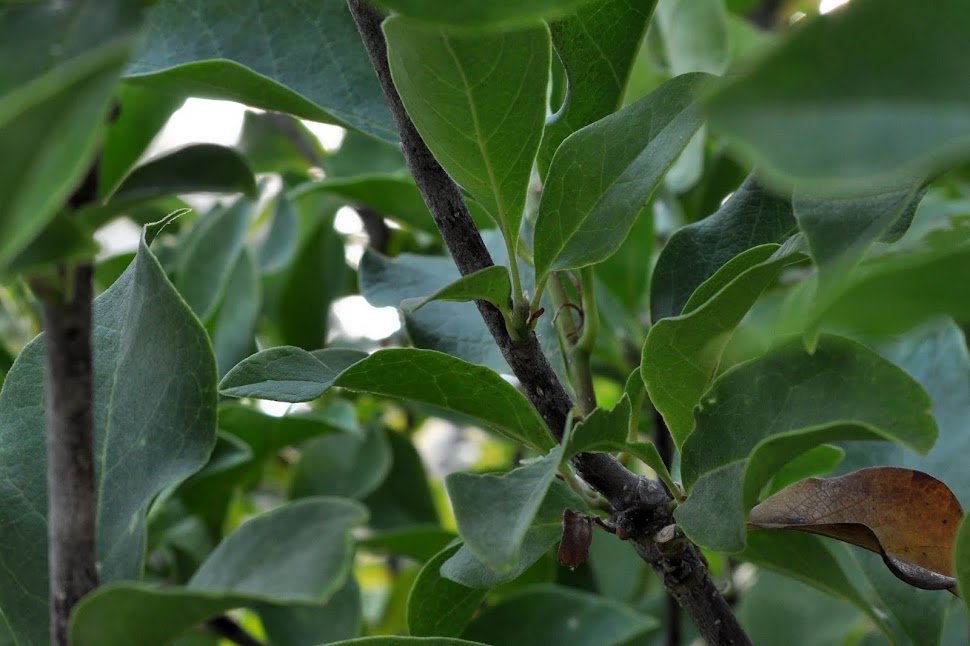
Healthy Magnolia Branch
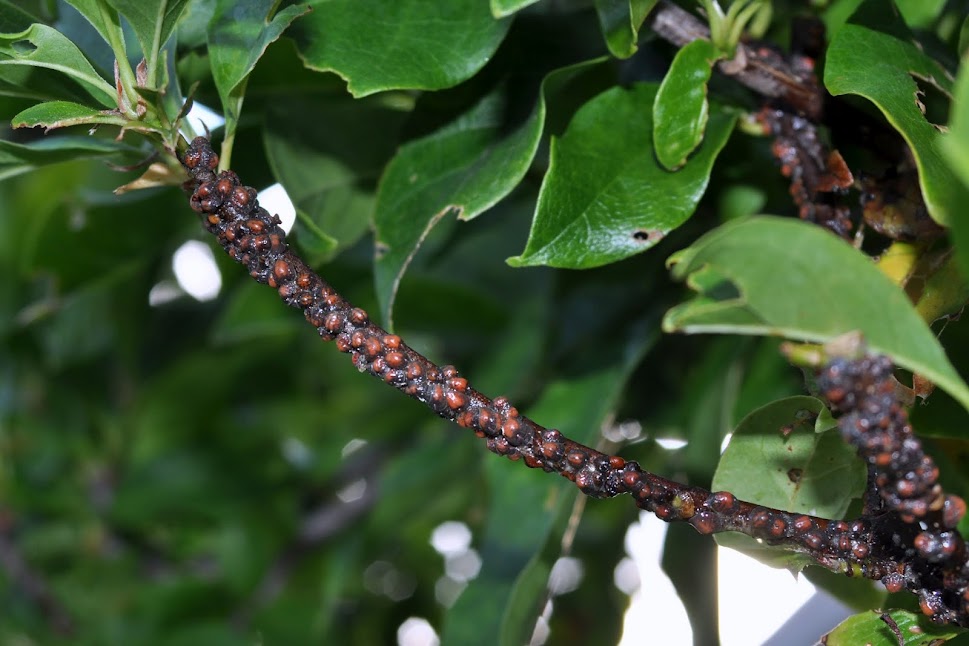
Scale Infestation on Magnolia Branch
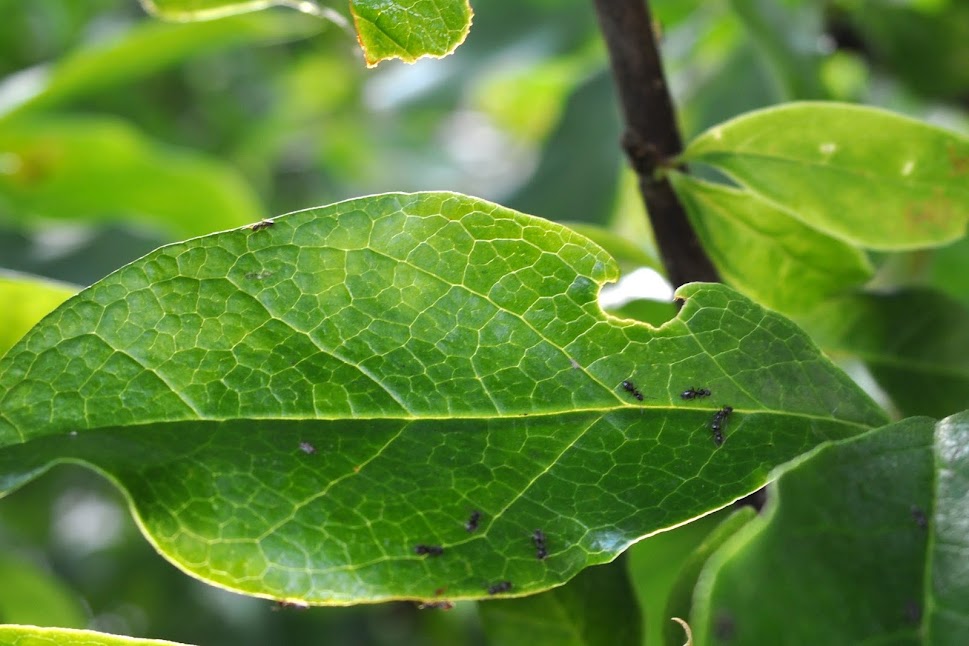
Ants Eating the Excreted Honeydew
The more I read, the more discouraged I become. Even the less organic solutions are often ineffective. I read an extensive article saying that Predatory Beetles worked well, only to learn they are no longer commercially available. Aphytis melinus is another possibility, and probably our next, best option. Pruning away the worst of the branches seems like a good idea, too. I would hate to have this spread to our larger magnolia just a few feet away.
Suggestions welcome!
 Gardening Nirvana